


Regional and seasonal: the taste of Luxembourg in July
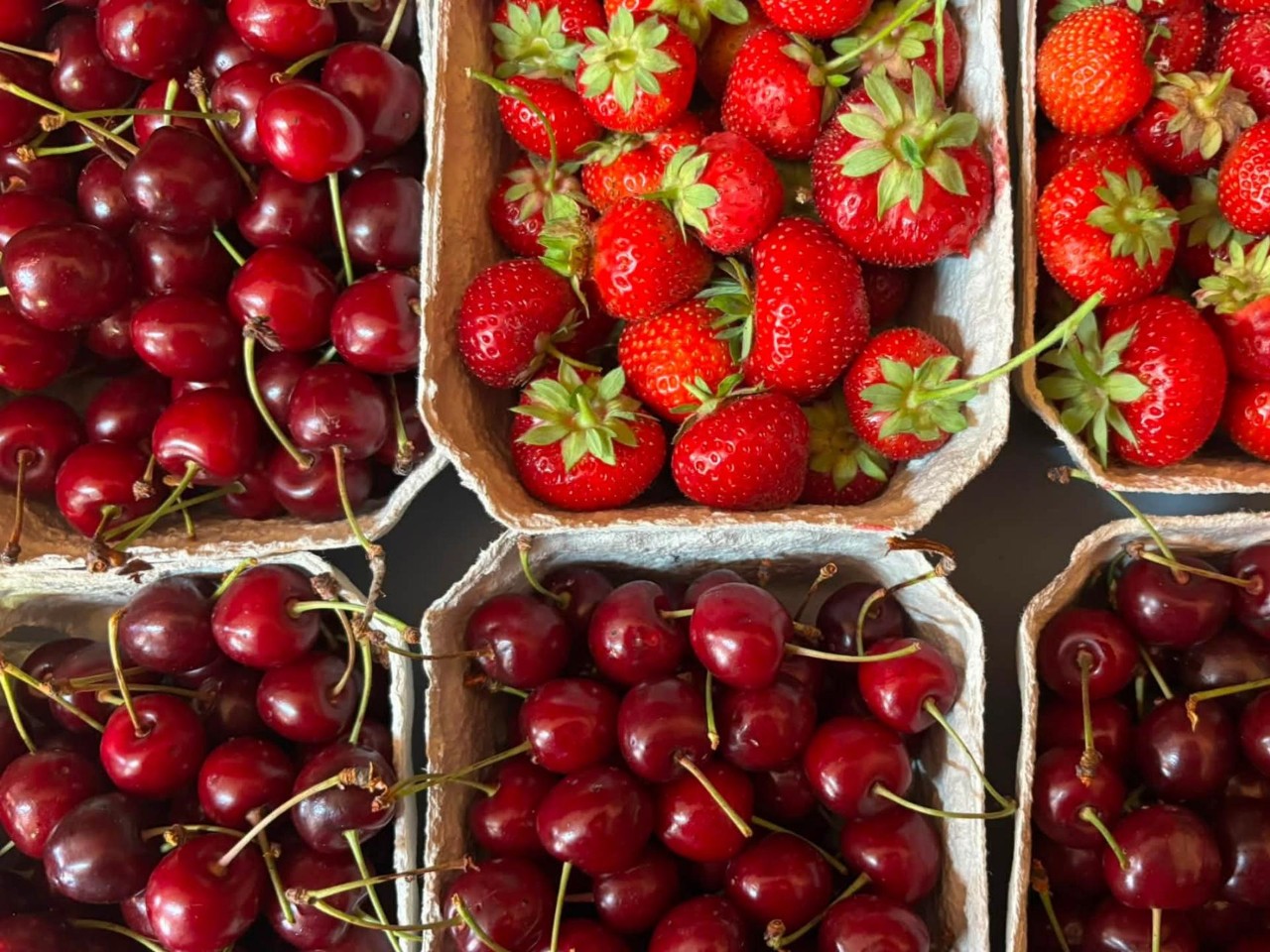
Adopting a regional and seasonal diet helps you to eat better, support the local economy, protect the environment and reconnect with authentic seasonal produce while showcasing the richness of local cuisine. Fancy eating and cooking local produce? Each summer month we showcase a fruit and a vegetable, plus a few producers, and offer you a few inspiring recipes to nourish your body and mind. In July,the spotlight is on cherries and fennel.
Cherries from Koulbicher Uebst a Geméis
At Koulbicher Uebst a Geméis, Thierry Garlemant and his partner are passionate about growing seasonal fruit and vegetables. Their wide range of vegetables (including tomatoes, peppers, cucumbers, aubergines and courgettes, amongst others) is complemented in summer by strawberries and cherries.
The cherries are harvested by hand, as their delicate skin does not cope well with mechanical handling, which partly explains their price. They must be picked when perfectly ripe, as they hardly continue ripening at all after harvesting. Their flavour therefore depends on the precise moment they are picked. The harvest is generally very short: for some varieties, only a few days separate the first ripe fruits from the end of the harvest, which requires producers to be highly responsive.
To foster closer ties with consumers, the business sells its produce directly from its shop on Rue Mayrisch in Colpach-Haut, from the mobile shop set up in Grevels, and at the Fleurs Binsfeld shop in Erpeldange-sur-Sûre. Thierry Garlemant also has a stall at the Rambrouch market every month. Furthermore, since July 2026, you can also buy their products at the brand-new self-service shop.
The company is also one of the partner producers in the Naturlëtz network, which connects local producers with consumers through short supply chains.

Did you know?
Nonidi, 19 Messidor in the French revolutionary calendar is the Day of the Cherry. This day usually falls on the seventh of July. A tasty nod to this iconic summer fruit, loved for its freshness and rich flavours.
The great taste of local and seasonal produce
Choosing regional and seasonal produce helps to support local farmers, promote sustainable agriculture and reduce environmental impact. These products, which are fresher and more flavourful, offer better traceability whilst boosting the local economy and celebrating culinary traditions. To discover regional and seasonal produce in Luxembourg, the #regionalseasonal campaign website features a seasonal calendar, practical information, recipes and a section dedicated to farmers.
Fennel from the TERRA co-operative
TERRA is a Luxembourg agricultural co-operative founded in 2014 by Sophie Pixius, Pit Reichert and Marko Anyfandakis. A pioneer of community-supported agriculture in Luxembourg, it grows vegetables and herbs in accordance with the principles of agroecology, whilst respecting the soil, biodiversity and natural cycles.
Much more than just a farm, TERRA is a community project that brings producers and consumers together around local, healthy and seasonal food. Members of the co-operative directly support production and receive weekly boxes of freshly harvested vegetables.
The co-operative is also a place for exchange, learning and raising awareness. It regularly organises workshops, training courses and events focusing on sustainable agriculture, permaculture and the ecological transition.
Their vegetable baskets are available on a subscription basis, and the list of vegetables available depending on the season can be viewed on their website. Initially distributed only in Bonnevoie and Eicherfeld, the baskets can now be delivered to your home or collected from several partner organic shops, offering members greater flexibility.
The co-operative also has a small stall open to the public on Saturday mornings in Bonnevoie (Place Léon XIII) from 10 a.m. to 12 p.m. The market offers visitors the chance to discover their specialities, even whilst on a sightseeing trip to Luxembourg.
TERRA is located at Eicherfeld (Luxembourg City), and can be accessed via Rue des Sept-Arpents.

TERRA, une ferme participative qui cultive autrement, avec et pour sa communauté.
-

TERRA Co-operative
© Michèle Betz & TERRA
-

TERRA Co-operative
© Michèle Betz & TERRA
-

TERRA Co-operative
© Michèle Betz & TERRA
-

TERRA Co-operative
© Michèle Betz & TERRA
-

TERRA Co-operative
© Michèle Betz & TERRA
-

TERRA Co-operative
© Michèle Betz & TERRA
-

TERRA Co-operative
© Michèle Betz & TERRA
-

TERRA Co-operative
© Michèle Betz & TERRA
-

TERRA Co-operative
© Michèle Betz & TERRA
-

TERRA Co-operative
© Michèle Betz & TERRA
-

TERRA Co-operative
© Michèle Betz & TERRA
Did you know?
Emperor Charlemagne helped to popularise the cultivation of fennel in western Europe by encouraging its growing on imperial estates. Fennel is one of the plants, herbs and trees mentioned in the famous "Capitulaire de villis", a legislative act issued by Charlemagne in the late 8th or early 9th century.
Recipes: fennel, from very simple to very elaborate, depending on your taste
Fennel lends itself to a wide range of recipes, as the whole plant is edible, from the bulb to the leaves and stalks. It can be finely sliced to add to salads, enjoyed as a dip, or cut into larger pieces and roasted with other vegetables.
A salad of crisp fennel, juicy oranges and fragrant mint, dressed with a simple honey and cider vinegar vinaigrette, is ideal as a summer side dish.
If you fancy something a little more sophisticated, the recipe book "The Schengen Lounge" by the hotel management school École d'Hôtellerie et de Tourisme du Luxembourg (EHTL) features a recipe for trout with fennel and ginger. You can buy the book online or download a PDF version for free from the EHTL website.

This recipe showcases trout accompanied by fennel prepared in three different ways: as a confit, in a crisp salad and as a caramelised purée. The dish is enhanced by a creamy ginger-infused sauce, which adds freshness and finesse.
The fennel is first roasted and caramelised for the confit, then prepared in thin strips and seasoned with lemon, dill and tarragon for the salad. Another portion is slowly caramelised before being blended into a smooth purée. The sauce is made from fish stock, cream and fresh infused ginger.
The trout is cooked as a fillet, skin-side down, to achieve a golden, slightly crispy skin whilst keeping the flesh tender. It is served with the various fennel preparations and drizzled with ginger sauce.
See the details of the ingredients and the step-by-step instructions for the recipe (Pdf) on the EHTL website.
Last update