


Kleeschen: tasty treats, gifts and traditions
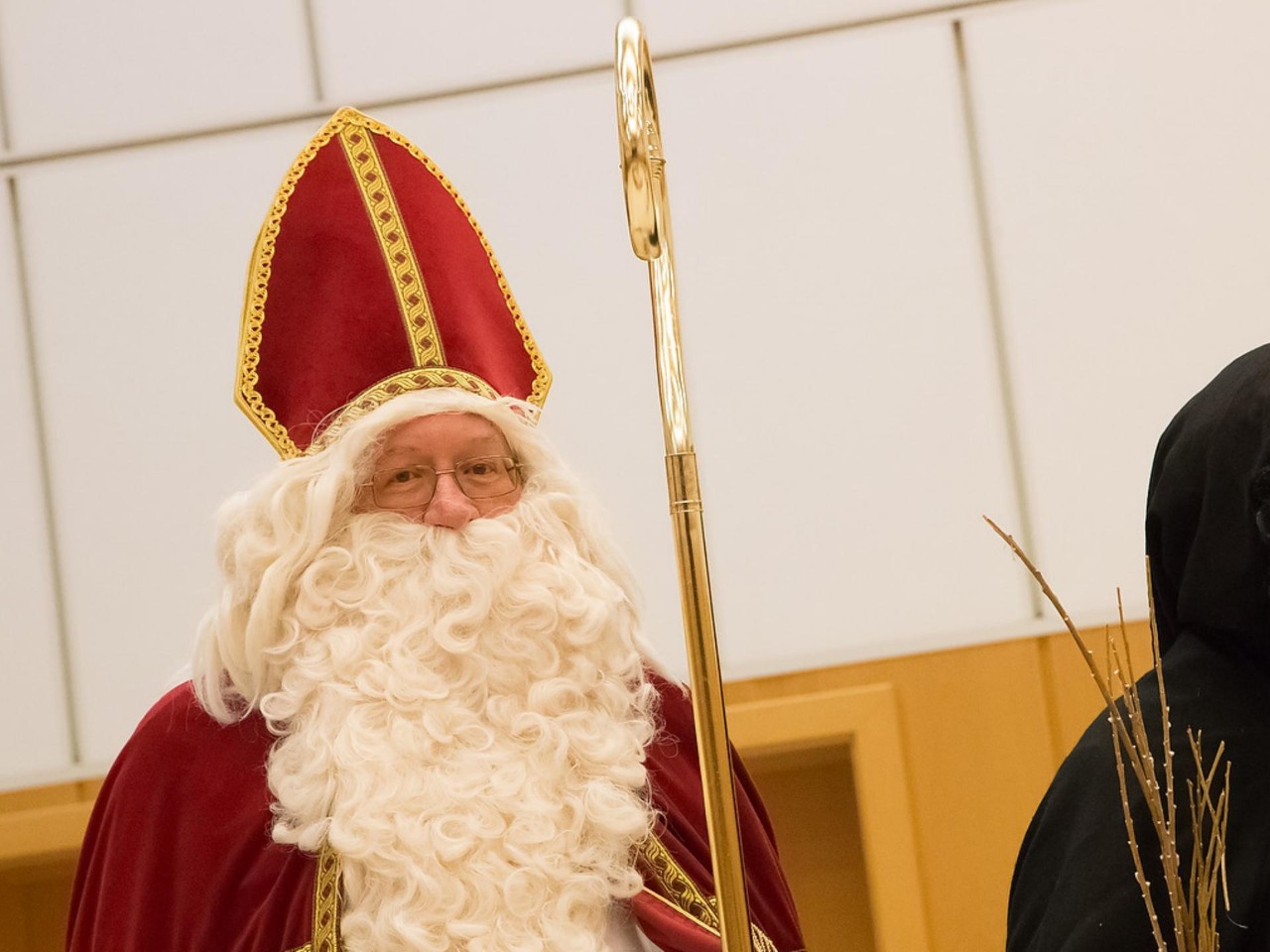
On 6 December, children in Luxembourg eagerly await a visit from the Kleeschen. Together with his trusty companion Houseker, he travels the length and breadth of the country to distribute gifts and sweets, upholding one of the country's most beloved traditions. A word of warning, however: while the Kleeschen brings gifts to children who have been good, the Houseker is there as a reminder that naughty children might be greeted with twigs rather than goodies.
The Kleeschen and the Houseker
In Luxembourg,the Kleeschen, also known as Zinniklos or Hellegen Niklos (Saint Nicholas), is represented by an old man with a long beard and white hair, wearing a red suit. Unlike Father Christmas, Saint Nicholas wears a pointed hat called a mitre and carries a crosier, a sort of staff, reflecting his role as a bishop. He is usually accompanied by the Houseker (similar to the concept of Black Peter), his fear-inspiring companion, who gives twigs to children who have misbehaved.
The tradition is so important in Luxembourg that the Ministry of Education, Children and Youth has made Saint Nicholas' Day a public holiday for primary school children. Over the days leading up to 6 December, the Kleeschen visits classes and schools, as well as Christmas markets, supermarkets and companies, much to the delight of local children.
Starting at the end of November, children leave a slipper in front of their bedroom every evening so that the Kleeschen can fill it with sweets. Then during the night of 5 to 6 December, he brings children their "main" presents, usually toys and edible treats. In keeping with tradition, children never actually see the Kleeschen; they discover their presents when they wake up.
The Kleeschen festival is not just about distributing gifts – it is a key part of Luxembourg's cultural heritage. The tradition is passed down from generation to generation, bringing families together around shared values of generosity and good will.
Did you know?
Niklosdag, or Saint Nicholas' Day, is part of Luxembourg's National Inventory of Intangible Cultural Heritage. It was added to the list on 29 July 2019 and is one of a wealth of Luxembourgish traditions, know-how and rituals that you can read about on the IKI – Immateriellt Kulturierwen zu Lëtzebuerg (Intangible Cultural Heritage of Luxembourg) website.

The origins of the tradition
Saint Nicholas was a real historical figure. Nicholas of Myra was a Christian bishop who lived between 270 and 343 or 345 CE in Patara and Myra, in Lycia (current-day Turkey). He was born into a wealthy family and received his inheritance when he was still very young. He was known for his acts of generosity and used his wealth to help the poor, the sick and children in need.
Nicholas of Myra became the patron saint of children, students, sailors and merchants. His feast day is celebrated on 6 December, the date usually associated with his death.
Tradition has it that he rescued three poor girls by throwing them gold coins from a window, giving them the means to escape poverty and prostitution. It is thought to be this episode that gave rise to the tradition of leaving shoes or slippers to be filled with gifts. Another legend tells how he resurrected three children who had been killed by a butcher.
How to tell them apart! Kleeschen vs Father Christmas
Kleeschen
Date: overnight from 5 to 6 December
Origin: real historical figure
Outfit: bishop's attire
Means of transport: a donkey
Accompanied by: Houseker
Father Christmas
Date: overnight from 24 to 25 December
Origin: more modern figure from traditional folklore
Outfit: red suit with a white fur trim and a hat with a pompom
Means of transport: a sleigh drawn by reindeer
Accompanied by: elves
The legend of Zinniklos
There are many tales telling how Saint Nicholas was, and still is, a wonderfully kind and generous figure.
Luxembourgish legend has it that he saved three children from the pot of a butcher who was planning to cook them. The story is told in the poem "D'Seche vum Zinniklos", written by Georg Schmitt in 1944. The adventure takes place in the historical district of Luxembourg City, near the Fish Market. The descriptions and dialogue are captivating, written in a style of Luxembourgish typical of the period. Each verse is a treat not just for the ears but for the eyes, with beautifully drawn illustrations by Georg Schmitt himself.
Over and above its literary and artistic value, "D'Seche vum Zinniklos" also contains a moral message, reminding children of the importance of obedience and good behaviour while also showing that kindness and forgiveness can triumph over past mistakes. By saving the three children, the Kleeschen embodies kindness, compassion and protection for the youngest members of society, and these values remain central to the tradition of Saint Nicholas.
Preparing for the arrival of the Kleeschen

Over the days and weeks leading up to the arrival of the Kleeschen, children prepare a wish list and send it as a letter to Saint Nicholas. Every year he has an office at POST Luxembourg. Letters can be sent to the following address (no stamp needed): 1, Spillstrooss, L-3290 Am Himmelsland. If you indicate your address you will receive a reply.
As Saint Nicholas' Day gets closer, children also enjoy singing songs about the Kleeschen. The best known is "Léiwe Kleeschen, gudde Kleeschen". The album "Mir waarden op een" by Zinglabumm contains 37 Luxembourgish songs about the Kleeschen and the festive season. Why not listen to a few?
On the evening of 5 December, children prepare a plate in the hope that it will be filled with gifts and sweets the next day. And as if by magic, overnight the plate is invariably filled with goodies.
Fancy making your own Boxemännchen?
This traditional brioche bun associated with Saint Nicholas' Day is one of the Kleeschen's favourite things to eat. Check out the recipe by chef and author Maischi Tibesart in our special article about this Luxembourgish speciality.

