


Volunteering and the Minièresbunn: Keeping Tourism and Heritage on Track
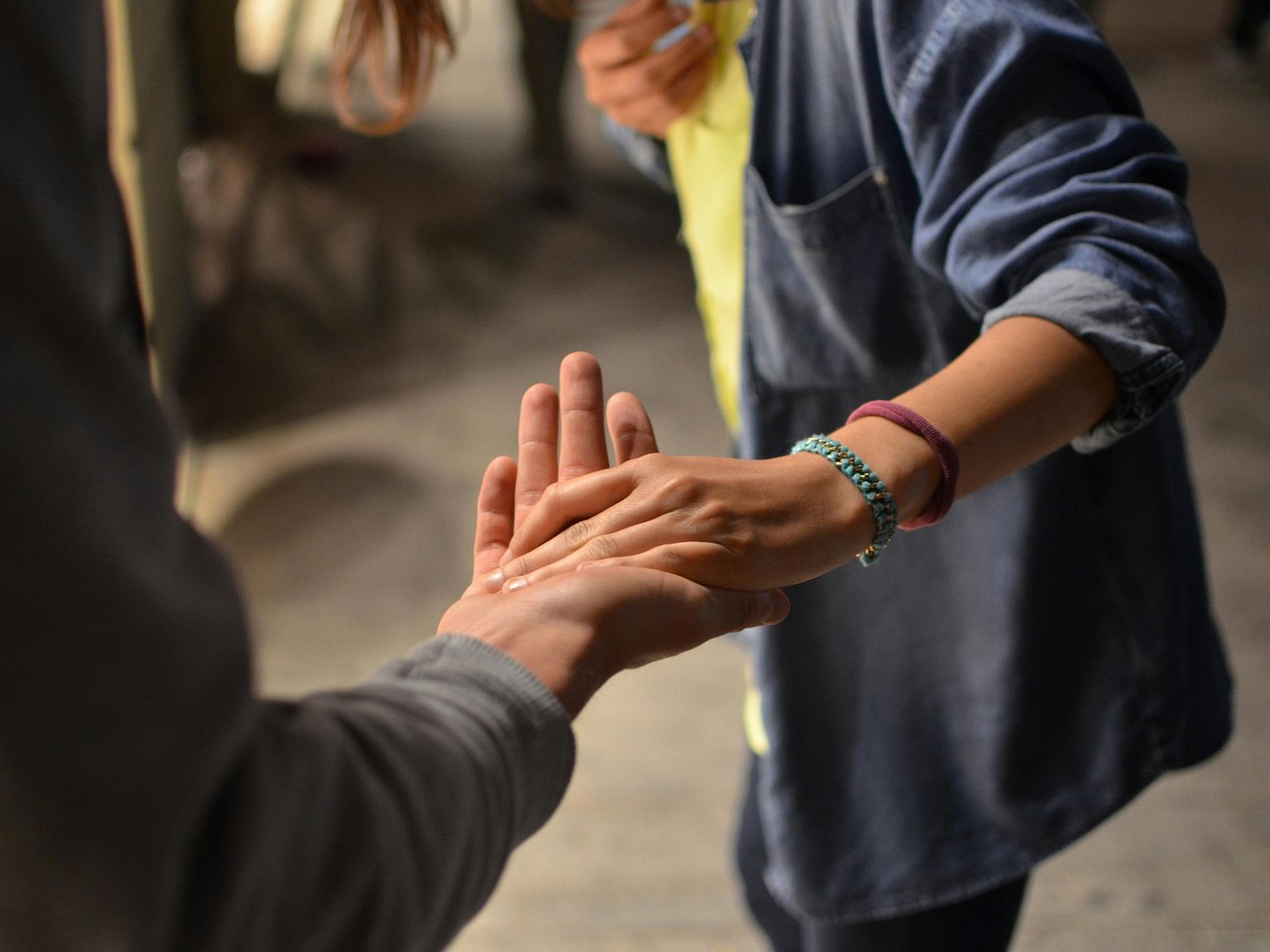
In Luxembourg, 35% of the population carried out a voluntary activity in 2022, which places the country fourth in Europe in terms of volunteer participation. The non-profit sector and informal volunteering play a key role in the development and cohesion of our societies. Driven by the values of solidarity, civic responsibility and respect, they are reflected in the voluntary, unpaid commitment of individuals to helping others or advancing the public interest. Voluntary service gives young people under the age of 30 the opportunity to dedicate themselves full-time to a general interest project for a set period. Furthermore, an increasing number of companies are encouraging their employees to take part in corporate volunteering for the benefit of charitable organisations. In Luxembourg, like elsewhere, these forms of commitment help to create more inclusive societies.
The Minièresbunn: living heritage in the heart of Luxembourg's former mining region
For over 30 years, the Minièresbunn has been bringing Luxembourg's industrial and mining history back to life. Along a unique route between Fond‑de‑Gras and Lasauvage, the association preserves, restores and returns authentic mining equipment to operation. Thanks to the commitment of its volunteers, locomotives, wagons, and infrastructure continue to operate, allowing visitors to discover the expertise and working conditions of miners in bygone days.
The Minièresbunn operates almost 6 km of tracks, 1.4 km of which are underground in the former mine that connects Fond‑de‑Gras and Lasauvage. The trains are hauled by steam, diesel and electric locomotives from different periods of the mining industry’s history, including one dating back to 1895. Each year, 7,000 to 9,000 visitors ride these historic trains, particularly on the cross-border line to Saulnes, the European Union's first narrow-gauge heritage railway.
Guided tours of the mine give visitors a glimpse of what everyday life was like for miners: their tools, machines and techniques, and the development of iron ore extraction. This underground route conveys an essential intangible heritage linked to Luxembourg's steel industry and mining past.
By operating these historic locomotives, the Minièresbunn preserves a unique technical heritage. The skills needed to maintain, restore and drive these historic machines are preserved and passed down to new generations of volunteers, ensuring the continuation of a rare skill set.
Galerie
-

Minièresbunn
© Minièresbunn, Gregory Bianco
-

Minièresbunn
© Minièresbunn, Joel Miltgen
-

Minièresbunn
© Minièresbunn, Gregory Bianco
-

Minièresbunn
© Minièresbunn, Francis Wagner
-

Minièresbunn
© Minièresbunn, Martine Ludwig
-

Minièresbunn
© Minièresbunn
-

Minièresbunn
© Minièresbunn, Joel Miltgen
-

Minièresbunn
© Minièresbunn, Martine Ludwig
-

Minièresbunn
© Minièresbunn
-

Minièresbunn
© Minièresbunn, Martine Ludwig
-

Minièresbunn
© Minièresbunn
-

Minièresbunn
© Minièresbunn
-

Minièresbunn
© Minièresbunn
-

Minièresbunn
© Minièresbunn, Joel Miltgen
-

Minièresbunn
© Minièresbunn, Gregory Bianco
-

Minièresbunn
© Minièresbunn, Francis Wagner
-

Minièresbunn
© Minièresbunn
The activities are not limited to tourist rides.
The association's activities go far beyond tourist rides. Its other tasks include restoring locomotives, maintaining tracks and electrical installations, organising visits and special train services, preserving mining infrastructure and workshops, conserving archives and tools, and passing on technical and historical knowledge. This extensive work is carried out entirely by volunteers, in cooperation with the National Institute for Architectural Heritage - INPA and the municipalities of Differdange, Pétange (L) and Saulnes (F).
The Minièresbunn is also a place for exchanging and learning, where different generations come together. The volunteers share their experiences, skills and shared passion for industrial and railway history, making the association a true space for living transmission of knowledge.
The association is always on the lookout for new motivated members. No experience is necessary: there's something for everyone, whether they're passionate about railways, industrial history, mechanics, electricity, manual work or simply curious to discover a unique world. Anyone who is interested can find out more via the Agence du Bénévolat (Volunteering Agency) or by contacting the foundation directly for information about suitable assignments.
Agence du Bénévolat – promoting action, strengthening solidarity
Since 2002, the Agence du bénévolat (Volunteering Agency) has promoted and developed volunteer work in Luxembourg among public authorities, non-profit organisations and the general public. Its website www.benevolat.lu showcases associations active in Luxembourg and provides a volunteering platform where interested people can find opportunities and associations can recruit volunteers.
Every year, the Agence du Bénévolat presents the Volunteer Merit Award which recognises unpaid commitment and highlights the valuable contribution of many active volunteers in Luxembourg. It also offers a "Volunteering" quality label, enabling associations to distinguish themselves through the quality of their organisation and their support for volunteers.
Did you know?
The knowledge and skills obtained through informal volunteering activities can be recognised in an officially capacity. Anyone who has taken part in a volunteer project or completed a training course offered by an association can receive a certificate issued by the organisation concerned. This document certifies the tasks carried out and the skills developed. What's more, volunteers can request an Accreditation of prior learning and experience (VAE) from the Luxembourg Ministry of National Education, Childhood and Youth. This certification, designed for those who have gained significant experience through volunteering, can help with finding work, professional advancement or a change in position.

Volunteering – young people in action
The formal voluntary service is different type of commitment that allows young people under the age of 30 to participate in a supervised general-interest project for a maximum period of 12 months in Luxembourg or abroad. Voluntary service is an ideal opportunity to combine a commitment to a good cause with a positive experience, thus enabling the participants to acquire skills that are useful in a professional world, such as self-awareness, autonomy, responsibility and teamwork. It’s also a highly rewarding human experience.
In Luxembourg, the National Youth Service (SNJ) is the main point of contact for the voluntary service. The website volontaires.lu provides information on the requirements for becoming a volunteer, the organisations offering public service opportunities and the training required. There are three types of volunteer service: the National Volunteer Service Programme, the European Solidarity Corps and the Cooperation Volunteer Service. The website is also intended for organisations that wish to host volunteers in Luxembourg and abroad. Any public or private organisation established in Luxembourg may apply for accreditation to become a voluntary service organisation.

Useful information
Young people aged under 30 can obtain a Certificate of participation, issued by the National Youth Service. This document describes the tasks carried out while volunteering and the skills acquired. It can be used to provide additional information when applying for a job or as part of an application for the VAE accreditation.
When businesses commit to making the world a better place
Corporate volunteering is an approach that enables businesses to encourage their employees to volunteer with charities and non-profit organisations. This concept serves as a bridge between the business world and the voluntary sector, creating a mutually beneficial partnership. Charities and non-profit organisations benefit from specialist skills, practical support and increased visibility, while businesses strengthen internal cohesion, boost employee motivation and reinforce their local presence. For example, a bank can encourage its employees to support a charity or a non-profit organisation with its financial management, while an industrial company can make its staff available to help refurbish premises or support the logistics of a charity event. The success of these projects depends on meticulous preparation: identifying the associations' needs, clarifying the businesses' expectations and organising the assignments in a practical and realistic way. In Luxembourg, the Agence du Bénévolat acts as a key intermediary, helping both parties to build balanced and lasting partnerships.
Last update